Article Highlights:

  • 61% of travelers want airline staff to manage alcohol service; 57% support stricter limits.
  • 84% say flight attendants and bartenders should have full authority to refuse service.
  • “Drunk on a plane” incidents remain a top passenger concern.
  • 52% of travelers are enrolled in TSA PreCheck or Global Entry for faster, stress-free screening.
  • Travelers want safety and efficiency — tighter alcohol control in the sky and faster security on the ground.


As global travel fluctuates, air rage is rising, and it has travelers talking louder than ever about alcohol limits and security. From disruptive in-flight behavior to growing concerns about safety and professionalism, passengers are signaling a clear preference, fewer drinks in the air and smoother lines on the ground.

The latest Global Rescue Traveler Sentiment and Safety Survey reveals that 61% of travelers believe alcohol consumption should be managed by trained professionals, such as bartenders and flight attendants, or left to the traveler’s discretion under their supervision. That’s up from 53% in December 2024, reflecting a shift toward trusting crew judgment rather than relying on rigid drink limits.

Despite that trust, overall concern about excessive drinking remains strong. Fivety-seven percent of travelers said airlines and airport bars should limit alcohol service, with women (59%) slightly more supportive than men (56%). Among US respondents, nearly six in ten (58%) favored tighter regulation — slightly higher than 55% among non-US travelers.

“Travelers clearly want airlines to take a stronger hand in managing alcohol service,” said Dan Richards, CEO of The Global Rescue Companies and member of the US Travel and Tourism Advisory Board at the US Department of Commerce. “Giving crews the discretion and support to make responsible decisions benefits everyone onboard—passengers and staff alike.”


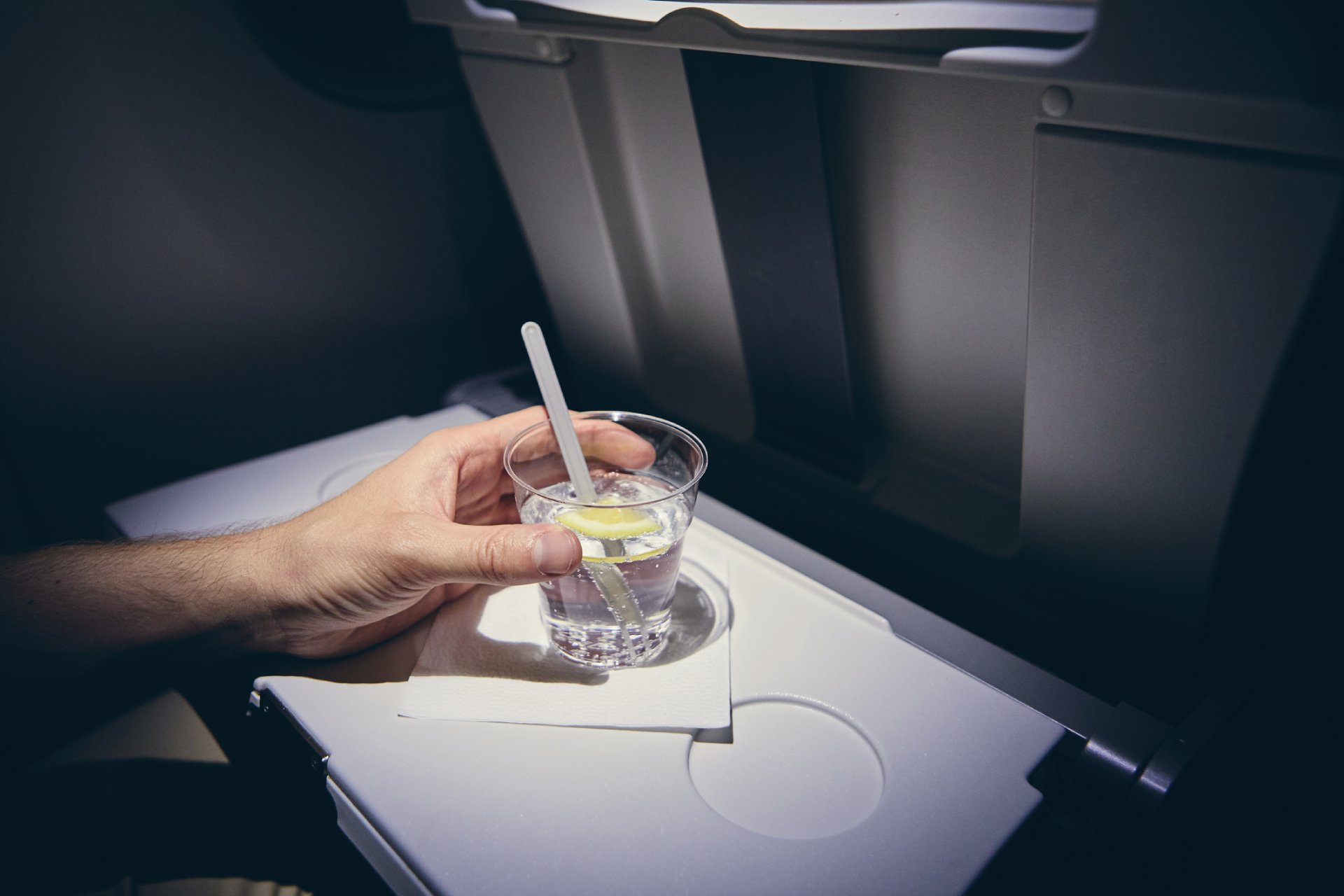
“Drunk on a Plane” Crosses the Line

Being drunk on a plane isn’t just a viral moment waiting to happen. It’s a serious safety concern. The International Air Transport Association (IATA) reports that alcohol remains one of the leading causes of unruly passenger incidents worldwide. From midair altercations to diverted flights, excessive drinking can turn an inconvenience into a crisis.

Currently, no major US airline enforces a strict numerical limit on alcohol consumption. Federal regulations require that all alcohol served on board must be provided by the airline, and passengers are prohibited from bringing their own. Flight attendants are legally authorized to deny service to anyone who appears intoxicated.

Still, enforcement varies. Airlines, including American, Delta, United, Southwest, JetBlue and Alaska, all prohibit self-provided alcohol but leave drink limits to crew discretion.

Flight attendant unions and advocacy groups have proposed stricter measures, including a two-drink limit in economy cabins, citing a rise in passenger incidents linked to in-flight intoxication. So far, no major airline has adopted a universal cap, but growing traveler support suggests change may be on the horizon.


Trusting Flight Crews, Airport Bartenders To Draw the Line

The Global Rescue survey found overwhelming trust in flight attendants and bartenders to exercise sound judgment: 84% of travelers said these professionals should have firm authority to refuse service when needed.

That trust stems from experience. Travelers understand that cabin crews face unique challenges: managing confined spaces, altitude-related effects on alcohol tolerance and diverse passenger attitudes. Even one intoxicated traveler can threaten flight safety, disrupt hundreds of passengers and endanger crew members.

While some respondents still favor formal alcohol limits—such as one drink per hour—the majority now prefer a case-by-case approach that empowers flight attendants to assess situations individually.

The survey’s findings point to a nuanced view of modern air travel: passengers don’t want a ban on in-flight drinks, but they do expect professional oversight and accountability.


Culture, Comfort and Control

Attitudes toward drinking in-flight differ across cultures. In Europe and parts of Asia, a glass of wine or beer on a plane is considered standard hospitality. In the United States, however, a growing number of travelers view alcohol consumption as a potential safety issue rather than a travel perk.

This divide was reflected in the survey data: non-US travelers were more likely to support traveler discretion (65%), while US travelers leaned toward tighter control (58%). Across both groups, women were more likely to prioritize safety over personal freedom.

As airlines continue balancing customer service and safety, the message from travelers is clear: they want crews to act decisively when passengers cross the line.


Travelers and the Security Line

While travelers are asking for more moderation in the air, they’re demanding greater efficiency on the ground, particularly at TSA and airport screening.

More than half of respondents (52%) to the Global Rescue Traveler Sentiment and Safety Survey said they are already members of Trusted Traveler Programs such as TSA PreCheck or Global Entry. These programs allow pre-screened travelers to enjoy faster security checks, shorter lines and less hassle at US airports.

64% of US travelers report being enrolled, and women were slightly more likely than men to hold membership (57% vs. 52%). Among those enrolled in Trusted Traveler Programs, the top reasons were clear:

  • Saving time at the airport (45%)
  • Less stress and greater convenience (30%)
  • Reducing hassle and restrictions (20%)

“Frequent travelers recognize that speed and predictability at the airport make a tremendous difference in the overall journey,” Richards said. “Programs like Global Entry and TSA PreCheck have become essential tools for managing the travel experience.”

But not everyone’s convinced. Roughly 21% of travelers said they have no plans to enroll, citing limited usefulness (35%), application complexity (17%), membership fees (14%) and privacy concerns (11%). Women and non-US respondents were more likely to voice hesitation about biometric data collection, reflecting broader debates around digital privacy and security.

Even so, participation continues to climb. With airport lines lengthening and flight schedules tightening, Trusted Traveler Programs have become the gold standard for frequent fliers who value their time as much as their tickets.

The dual storylines emerging from this year’s Global Rescue Traveler Sentiment and Safety Survey tell a simple truth: travelers want more control where it matters.

They want airline crews and airport bartenders to enforce alcohol limits to keep the skies safe, and they also want airport authorities like the TSA to streamline security so the journey starts and ends stress-free.


The Global Rescue Connection

Whether it’s an unexpected in-flight emergency or a delayed evacuation far from home, travelers need more than convenience; they need confidence.

A Global Rescue membership provides access to field rescue, medical evacuation and 24/7 medical advisory services anywhere in the world. From altitude sickness in the Andes to an accident abroad, Global Rescue’s experts are always on call to guide, evacuate and protect members when the unexpected happens.

Because while flight attendants keep order in the air and the TSA maintains safety on the ground, Global Rescue protects travelers everywhere in between.