Article Highlights:

  • Nearly half of travelers are open to using smart glasses for translation, though only three percent use them today.
  • Younger and non-US travelers are the most eager to try smart glasses while older groups remain cautious.
  • Men are more likely than women to plan trips using smart glasses while women show higher concern over privacy.
  • Nearly 90 percent of travelers find smartphone translation apps useful for international travel.
  • Non-US travelers are slightly more enthusiastic about both smart glasses and translation apps than US travelers.


International travel has always promised discovery and connection, yet language barriers remain one of the most significant challenges. Ordering food, asking for directions or navigating a train station in a foreign language can be daunting. Now smart glasses and translation apps are revolutionizing how travelers communicate abroad. These tools remove friction, boost confidence and open doors to richer cultural exchanges.

A new Global Rescue survey of the world’s most experienced travelers explored attitudes toward smart glasses for live translation and smartphone translation apps integrated into calls and messaging. The results reveal a mix of excitement and caution shaped by age, gender and geography.


Smart Glasses: Translation Right in Front of Your Eyes

Smart glasses are wearable devices that display translations in real time. With embedded cameras and augmented reality, they can instantly overlay translations of signs, menus or even spoken conversations. For example, a traveler in Tokyo could look at a subway sign and see the English translation right in their line of sight.

Adoption remains small but growing. Just three percent of travelers say they already use smart glasses, though younger travelers under 35 are twice as likely (six percent) to have tried them. The bigger story is potential growth. Fourteen percent plan to explore smart glasses and 35 percent are considering them. Taken together, nearly half of global travelers see smart glasses as part of their future.


Who’s Most Interested?

Gender differences are modest but telling. Men (15 percent) are more likely than women (11 percent) to say they plan to explore smart glasses. Women, however, are slightly more represented among those still weighing the idea with 36 percent saying they’re considering it.

Age is a key factor. Younger travelers under 35 show the highest adoption and interest: six percent already use smart glasses and 12 percent plan to try them. Among those 55 and older only three percent use them and 12 percent plan to explore them, though 36 percent remain open to the idea.


Translation Apps: The Pocket-Sized Lifeline

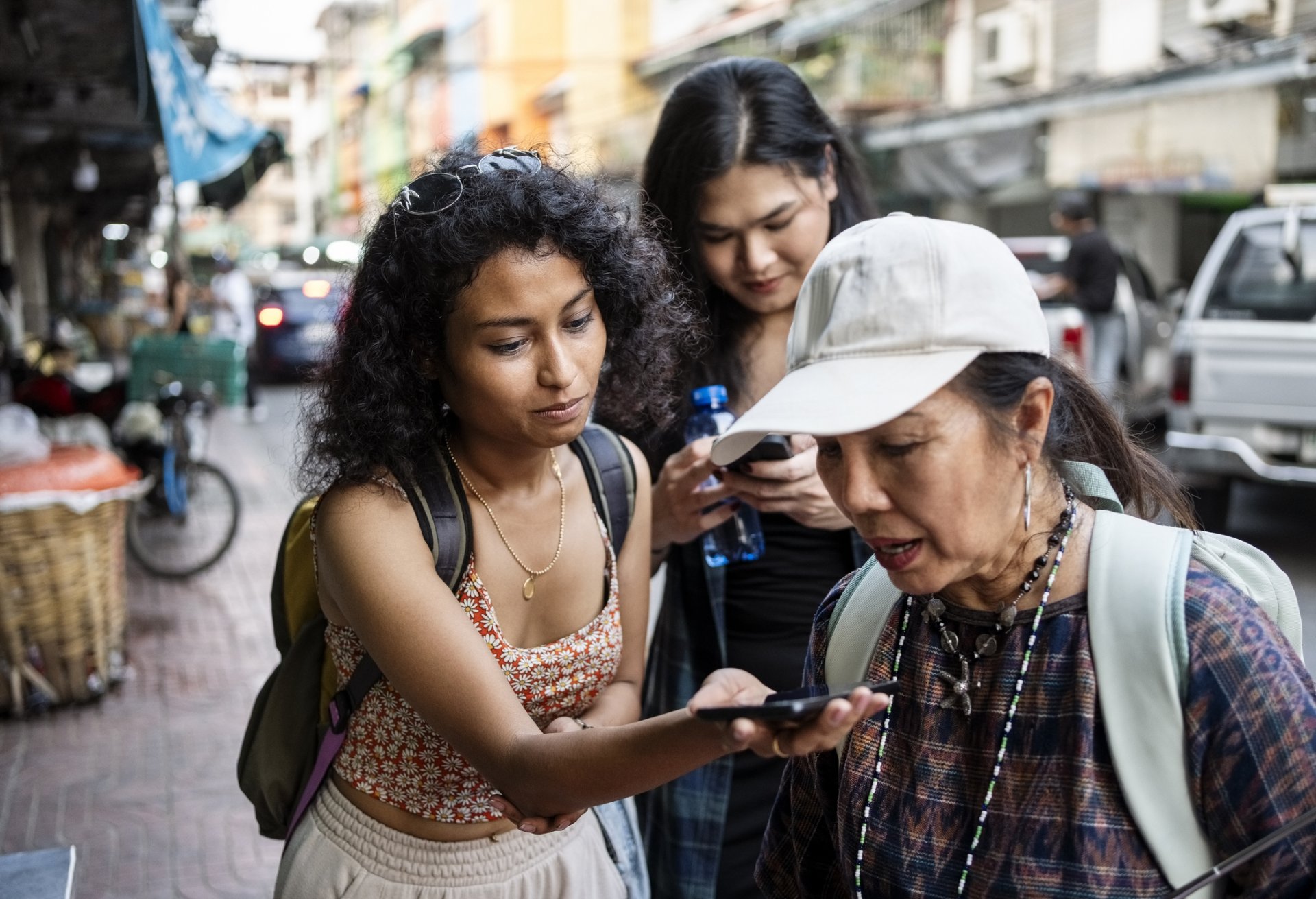
While smart glasses are still emerging, translation apps on smartphones are already indispensable. Travelers use them daily to scan text, listen to speech or translate live conversations. Recently, companies have begun integrating these tools directly into messaging, video calls and phone calls.

Survey results show overwhelming support. Thirty-six percent of travelers say translation apps integrated into smartphone communication would be “extremely useful,” and 54 percent say “somewhat useful.” That means nearly 90 percent see translation apps as valuable for travel.

The strongest enthusiasm came from travelers aged 35 to 54 with 40 percent calling the features extremely useful. Younger travelers under 35 also responded positively with 35 percent rating them extremely useful and 57 percent somewhat useful. Even among those 55 and older, 89 percent rated translation apps as useful though fewer described them as “extremely” so.

Gender differences are minimal. Men and women alike see translation apps as critical, with more than 90 percent in each group rating them positively. Geographically, non-US travelers were slightly more enthusiastic: 38 percent called them extremely useful compared to 36 percent in the US.


The Future of Travel Communication

Despite the promise, not everyone is sold on smart glasses. Forty-four percent of travelers say they are not interested. Women (45 percent) were slightly more skeptical than men (43 percent), and older travelers showed greater resistance than younger ones.

Some hesitate over cost and privacy while others prefer the challenge of learning phrases or feel that translation apps on smartphones are enough. In contrast, resistance to smartphone-based translation was much smaller. Fewer than 10 percent said translation apps would not be useful and only two percent said “not useful at all.”

Taken together, the findings show translation apps are already mainstream while smart glasses are still in the early adoption phase. Younger and non-US travelers are leading the charge while older groups remain more cautious. Men are slightly more eager to experiment while women are weighing practicality.

What’s clear is that translation technology — whether on a smartphone or in smart glasses — is transforming global mobility. Travelers can engage more confidently, dive deeper into local cultures and overcome language barriers with ease.


The Global Rescue Connection

Every trip carries unknowns, from language barriers to unexpected emergencies. Past Global Rescue missions have shown that when travelers are far from home, reliable support makes all the difference.

Technology cannot replace the human connections at the heart of travel, but it can enable them. Translation apps and smart glasses make it easier for travelers to have authentic conversations, explore local traditions and move beyond surface-level tourism. From ordering a meal in Madrid to asking for directions in Hanoi, communication becomes seamless, opening new possibilities for discovery.

The survey shows travelers want these tools and are ready to use them. As technology advances, translation apps and smart glasses will become not just convenient but essential companions for international travel.

A Global Rescue membership provides more than evacuation and medical advisory; it also includes detailed destination reports to prepare before you go and translation services in an emergency to bridge communication gaps when they matter most. Together, these resources ensure members can travel with confidence knowing that help, clarity and guidance are always within reach.